Commercial Trailer Brake Lockups on the QEW: Roadside Release Techniques
A locked trailer brake is one of the more unnerving problems a driver can experience on the QEW, where merges are tight, traffic is dense, and there's rarely a generous shoulder to work with. Knowing the common causes and how a mobile technician safely releases a locked brake on the roadside can help drivers make better decisions in the minutes before help arrives.
What Actually Causes a Trailer Brake to Lock Up
Most lockups trace back to one of a few mechanical failure points. A broken or seized slack adjuster can prevent the brake shoe from retracting after application. A ruptured air line or a faulty spring brake chamber can cause the parking brake spring to apply unexpectedly.
Corrosion and road salt are a major contributing factor on Ontario routes, particularly through winter months — seized cam bushings, rusted-solid slack adjusters, and corroded chamber pushrods are common on trailers that see heavy QEW and GTA salt exposure.
Warning Signs Before a Full Lockup
Drivers often get some warning before a brake fully seizes: a dragging or smoking wheel, uneven braking pull, or a slack adjuster that's visibly out of stroke. Any of these signs on a route as busy as the QEW warrant getting to the shoulder or the nearest safe pull-off immediately.
How Mobile Technicians Safely Release a Locked Brake
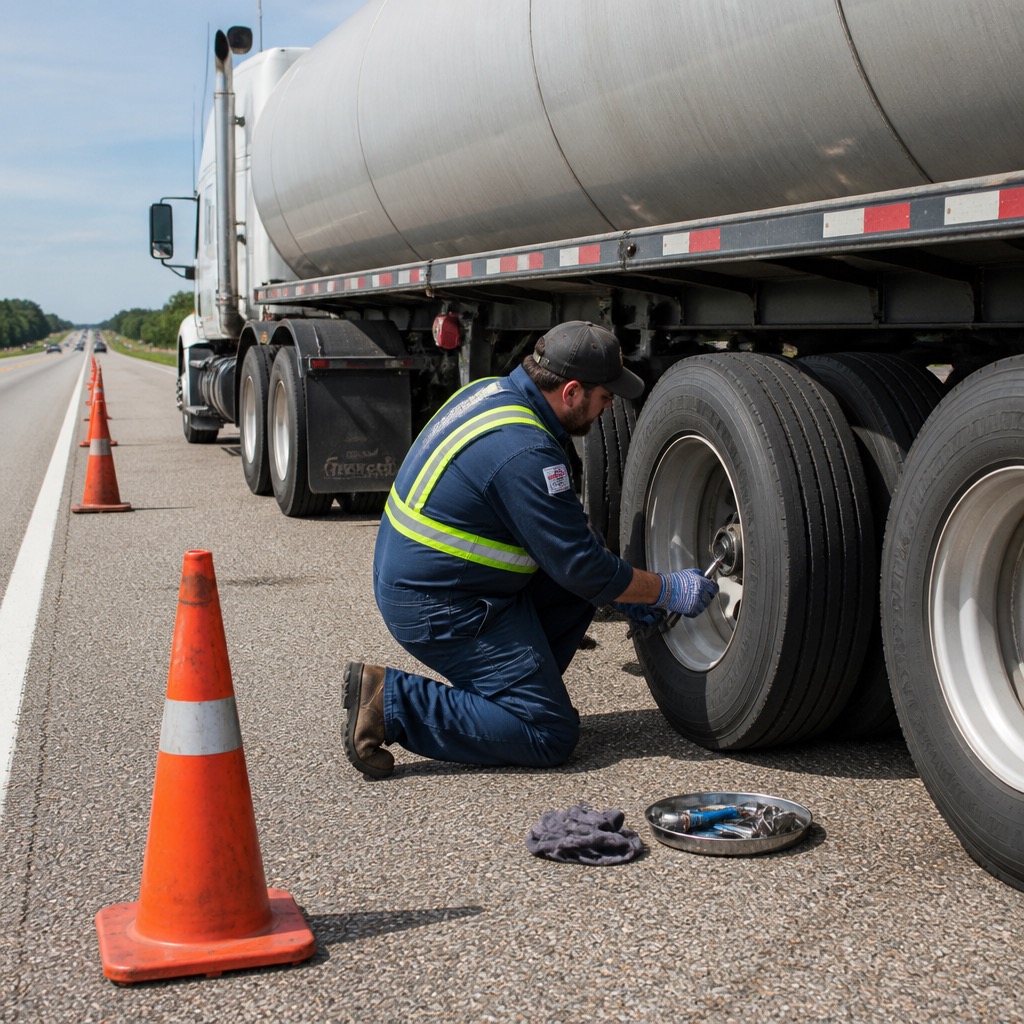
The first step on arrival is always to confirm whether the lockup is a spring brake application from lost air pressure or a mechanical seizure in the foundation brake itself, since the release procedure differs significantly. For a spring brake lockup, a technician can manually cage the spring brake chamber using the correct caging tool.
Never attempt to force a locked trailer forward under engine power — dragging a locked wheel even a short distance can flat-spot a tire, damage the drum or rotor beyond repair, and in worse cases cause a wheel-end fire.
A locked trailer brake on a corridor like the QEW isn't something to wait out or force through — it needs a technician who can quickly tell the difference between a spring brake application and a mechanical seizure. Call +1 (289) 943-7205 for 24/7 mobile dispatch.