
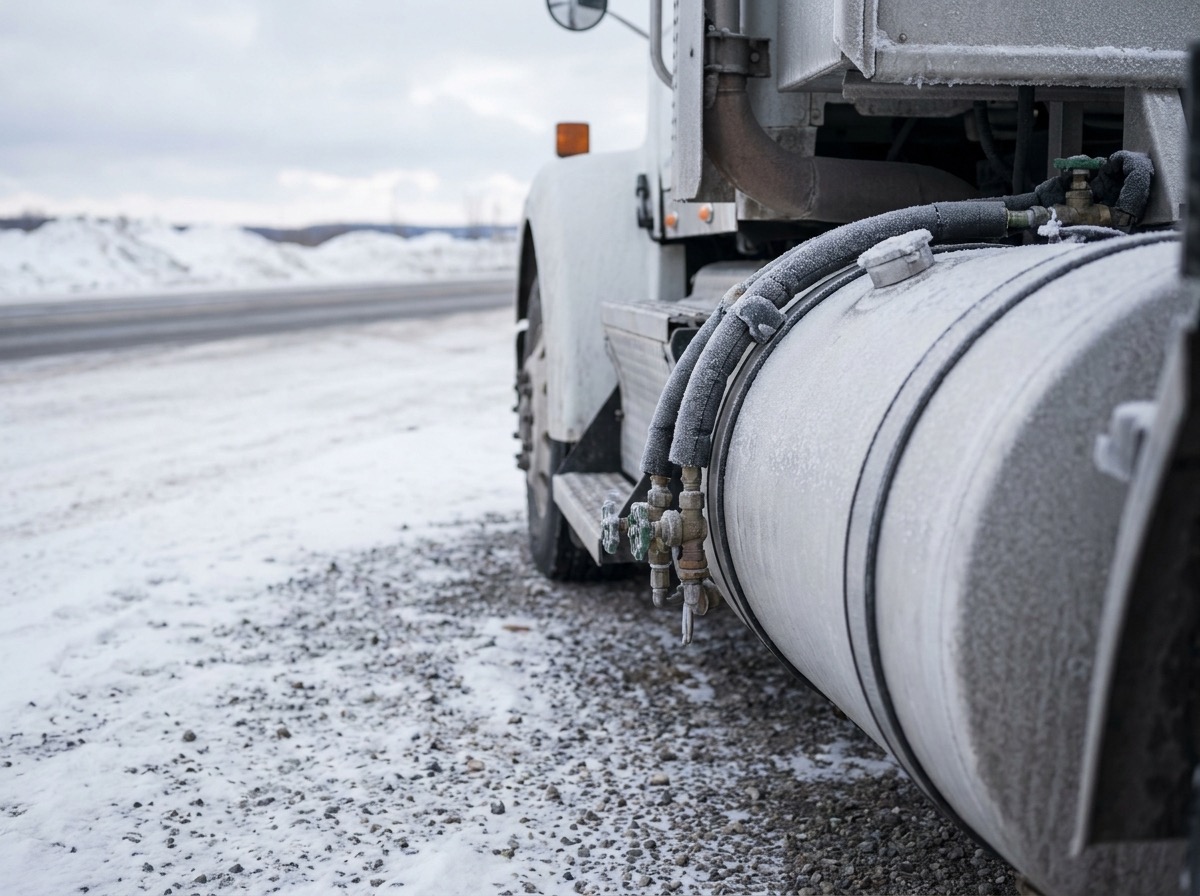
Cold Weather Diesel Survival: Preventing Fuel Gelling on Ontario Highways
Ontario winters put diesel fuel systems through a stress test that few other conditions can match, and every year the first hard cold snap brings a wave of calls for engines that won't start or that die on the shoulder after running rough for a few kilometers. Fuel gelling, waxing, and water contamination in fuel lines are almost entirely preventable with the right prep, but once a truck is stopped dead on a corridor like the 400 or 401 in sub-zero temperatures, options narrow fast.
What Actually Causes Fuel Gelling
Diesel fuel contains paraffin wax, which stays dissolved in the fuel at normal temperatures but begins to crystallize as temperatures drop. This is measured as the cloud point — the temperature at which wax crystals become visible in the fuel. Once you go colder, those crystals grow large enough to clog fuel filters, restrict flow through fuel lines, and eventually starve the engine of fuel entirely.
Ontario's winter-blend diesel sold at most truck stops is treated to lower the cloud point somewhat, but blend quality varies by supplier and by how long fuel has sat in underground storage tanks.
Prevention Steps That Actually Work
Anti-gel additives are worth adding to your routine well before the fuel has a chance to cool down — they're far more effective mixed in at the pump than added after fuel has already started to thicken. Keeping your tank above the half-full mark also reduces condensation buildup inside the tank, which is a major source of the water contamination that freezes and blocks fuel filters independent of wax gelling.
Block Heaters, Idling, and Parking Choices
A functioning block heater plugged in overnight keeps engine oil and coolant warm enough to support a normal cold start, but it does nothing for fuel already gelling in exposed lines and filters running along the underside of the chassis.
Fleets running the 400 and 401 corridors through the GTA in winter should treat fuel management as seriously as they treat tire pressure checks — it's a recurring cost of doing business in this climate, not a one-time fix.
What to Do If You're Already Gelled Up on the Highway
If your engine is cranking but not catching, or it started and then died within a few minutes, gelled fuel or a clogged filter is a strong possibility. This is a job for on-site thawing and filter service rather than a tow in most cases — a mobile technician can apply direct heat to fuel lines and filter housings, replace a clogged filter, and treat the remaining fuel with additive to get you moving again.
Cold weather diesel problems are predictable, seasonal, and almost always preventable with a bit of routine attention to fuel quality and filter condition. For on-site fuel system thawing and repair anywhere across the GTA and the 400/401/QEW/407 corridors, call +1 (289) 943-7205 for 24/7 mobile dispatch.