Blown Commercial Tires on Hwy 400: Dual Replacement Safety Protocol
A blown drive or trailer tire on Highway 400 is one of the more common calls a mobile heavy-duty mechanic gets, and also one of the more dangerous roadside situations if it's handled carelessly.
Why a Single Blown Dual Isn't Just a Simple Tire Change
When one tire in a dual pair blows, the remaining tire is suddenly carrying a load it wasn't built to handle alone, and it's often already been overheating and flexing under that extra weight since the blowout happened.
Safety Protocol Before Any Wrench Touches the Wheel
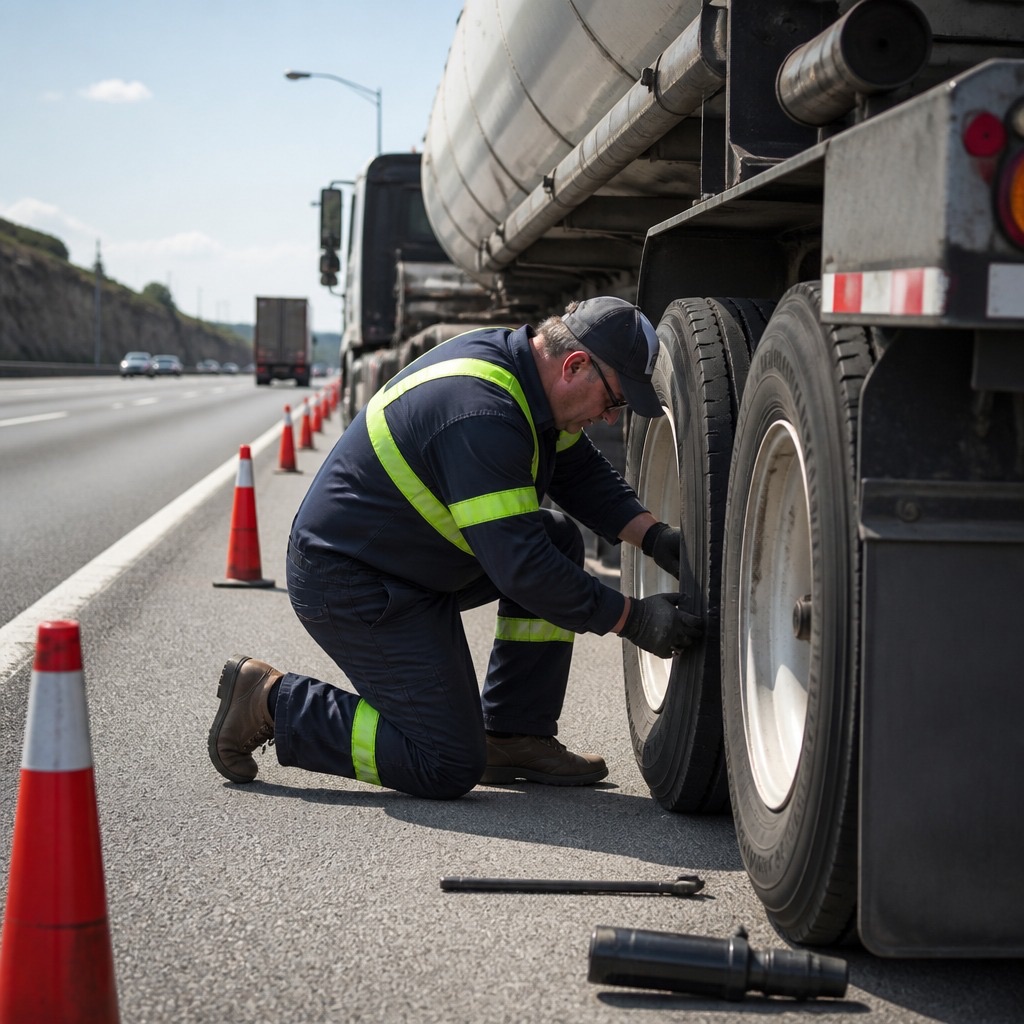
Highway 400 shoulders vary a lot in width, and some stretches leave very little clearance from live traffic. Standard protocol includes hazard flashers, reflective triangles placed well back, and staying behind the guardrail while waiting.
Matching Duals Correctly
Dual tires need to be reasonably close in outside diameter and tread depth, because a mismatch forces the smaller tire to spin faster and drag, generating excess heat and uneven wear that can lead to another failure down the road.
Getting Back on the Road the Right Way
Once the new or matched tire is mounted, torque needs to be checked to spec, not just snugged down, since lug nuts that back out at highway speed create a far more serious hazard than the original blowout.
A blown commercial tire on Highway 400 is a safety situation first and a mechanical one second. Onecall Roadside Repair dispatches mobile technicians equipped with matched commercial tires and proper torque equipment across the GTA and the 400, 401, QEW, and 407 corridors, 24 hours a day. Call +1 (289) 943-7205 the moment a tire lets go.