
Reefer Temperature Alarms on Hwy 407: Emergency Refrigeration Repairs
Nothing tightens up a dispatcher's morning like a reefer alarm buzzing on a trailer running the 407 with a full load of perishables. Understanding what these alarms actually mean, and how emergency reefer service on the shoulder works, can be the difference between a minor delay and a rejected load.
What a Temperature Alarm Is Actually Telling You
Common triggers include a defrost cycle that ran long, a low refrigerant charge from a slow leak, a failed or intermittent compressor clutch, or airflow blocked by a load stacked too tight against the bulkhead. Electrical gremlins are just as common — a worn harness connector, a blown fuse, or a sensor probe reading incorrectly can all set off an alarm even when the unit is mechanically fine.
Why Speed Matters More Than It Does for Tractor Repairs
A blown steer tire stops the truck. A reefer alarm doesn't stop anything, which is exactly why it's dangerous to ignore. The trailer keeps rolling while the box temperature drifts, and depending on the commodity, a few hours outside the acceptable range can mean a full load rejection at the receiver.
What Mobile Reefer Techs Actually Do Roadside
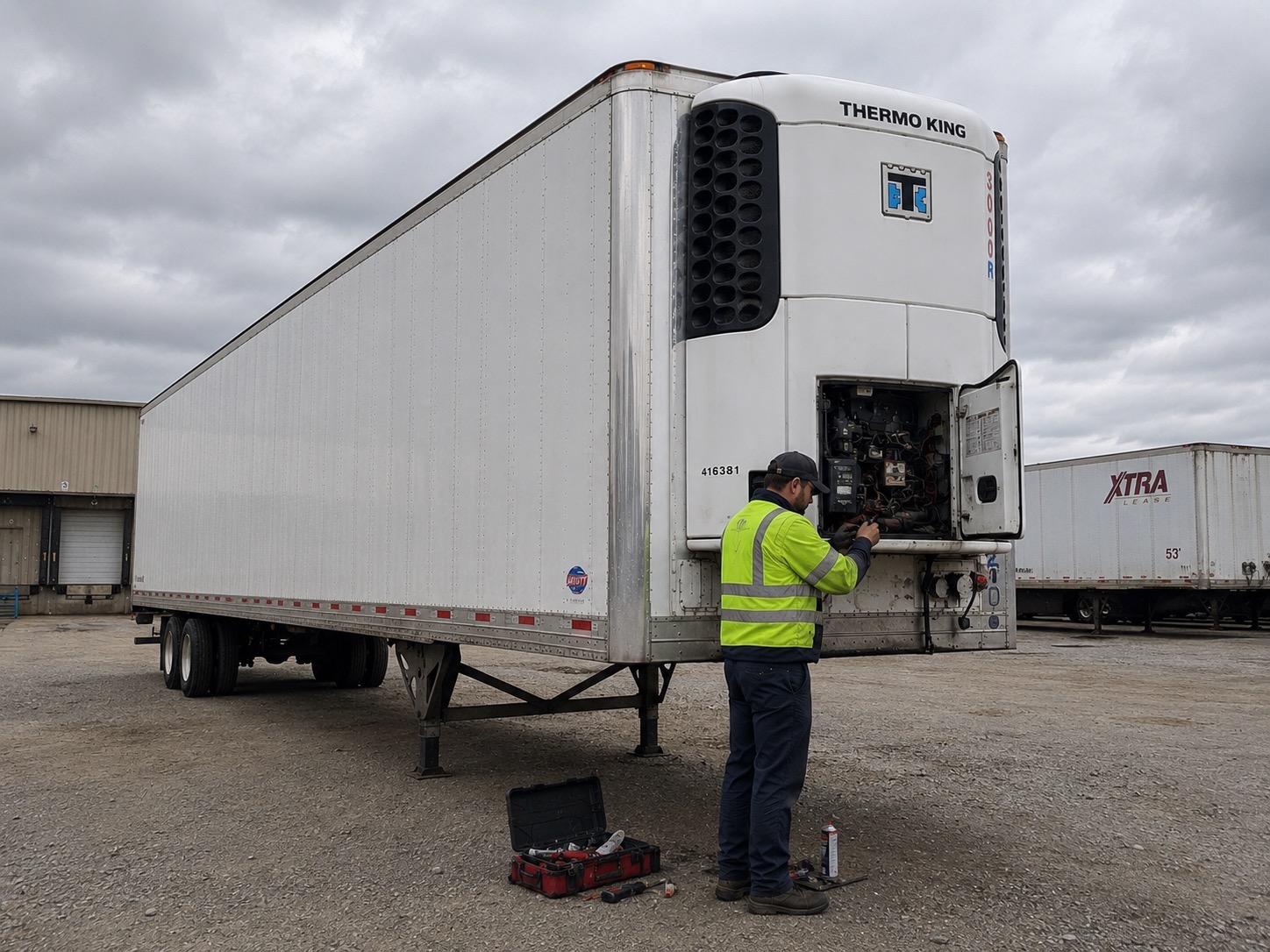
On a shoulder or truck stop call, a mobile reefer tech will typically pull fault codes, check refrigerant pressures on both the high and low side, inspect the compressor clutch and belt tension, verify the condenser and evaporator fans are spinning freely, and confirm sensor wiring is intact.
Preventing the Next Roadside Alarm
Building reefer inspection into a fleet's regular PM cycle, especially checking door gaskets, belt tension, and refrigerant charge, catches most of these issues before they become a 407 shoulder call.
A reefer alarm on the 407 or anywhere else in the GTA doesn't have to end in a rejected load if it's handled fast and correctly. Onecall Roadside Repair sends mobile techs equipped to diagnose and repair refrigeration units roadside, around the clock. Call +1 (289) 943-7205 for 24/7 mobile dispatch across the GTA and Ontario's highway corridors.