Heavy Haul & Oversized Load Trailers: Types, Permits and What Breaks First
Moving an oversized load in Ontario means matching the right trailer configuration to the load, staying inside permit conditions, and knowing which components take the most abuse under sustained heavy weight.
Matching Trailer to Load
Lowboys and RGNs (removable gooseneck) trailers exist for a reason — they lower the deck height so a tall load still clears bridges and overpasses. Multi-axle configurations spread weight to stay within Ontario's axle-weight limits rather than concentrating it on fewer contact points.
Permits Aren't Optional Paperwork
An oversized or overweight load moving in Ontario needs a permit specifying the route, escort requirements, and travel time windows, and deviating from that route can mean a bridge that wasn't rated for the load, or a fine that costs more than the trip was worth.
Suspension and Axle Components Take the Brunt
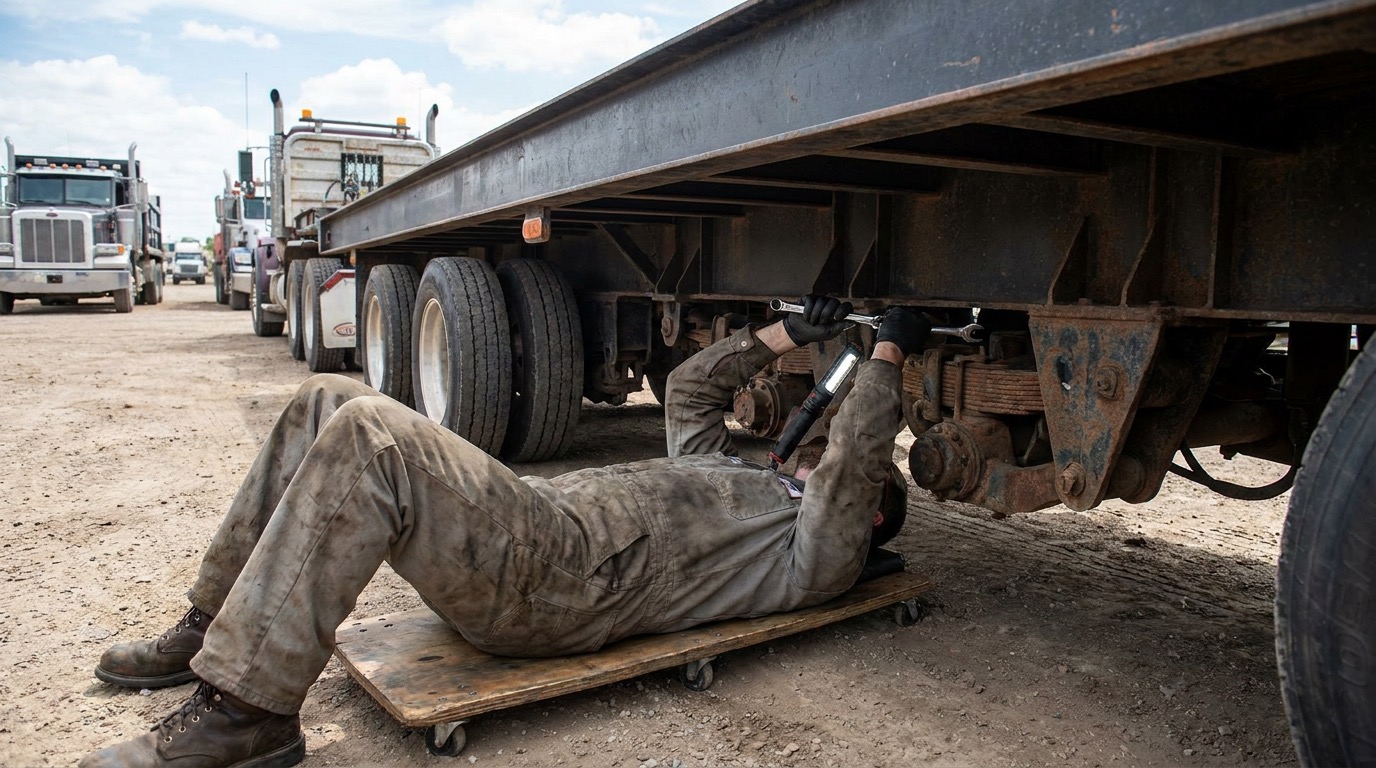
Heavy haul work puts sustained stress on axle bearings, suspension bushings, and hydraulic lift-axle systems that a standard dry van trailer rarely sees. These are usually the first things to show wear on a heavy haul fleet, and the first thing worth inspecting after a run with an unusually heavy or awkward load.
Tire Pressure Management Matters More Here
Because heavy haul trailers often run multiple axle groups at different effective loads, tire pressure needs to be checked and matched more carefully than on a standard trailer — uneven pressure across a multi-axle group accelerates wear and raises blowout risk under sustained heavy weight.
Heavy haul equipment breaks down the same way any commercial trailer does, just under more load. Onecall Roadside Repair dispatches mobile technicians equipped for heavy-duty axle, suspension, and hydraulic repairs across the GTA and Ontario's core corridors, 24/7. Call +1 (289) 943-7205.