Understanding DPF & DEF System Fault Codes: On-Site Mobile Regeneration
Few things frustrate a fleet manager more than a truck derated to a crawl on Highway 400 because of a DPF or DEF fault code, especially when the driver has no idea what triggered it. Modern diesel aftertreatment systems are effective at cutting emissions, but they're also complex enough that a single sensor fault, a bad batch of DEF fluid, or an incomplete regeneration cycle can put a truck into limp mode within minutes.
What DPF and DEF Systems Are Actually Doing
The diesel particulate filter, or DPF, traps soot particles from exhaust gas and periodically burns them off in a process called regeneration, which requires sustained high exhaust temperatures. The DEF, or diesel exhaust fluid, system injects a urea solution into the exhaust stream ahead of the SCR catalyst to break down nitrogen oxides into harmless nitrogen and water vapor.
That performance restriction is where drivers feel the pain. A truck can go from full power to a 20-30 km/h derate, or even a full shutdown at the next key cycle, depending on how far the fault has progressed.
Common Fault Codes and What They're Telling You
The important thing to understand is that most of these codes are triggered by a failed regeneration attempt, not necessarily catastrophic filter damage. In many cases, the DPF itself is fine — it just needs a properly completed regen cycle under the right conditions to clear the soot loading and reset the fault.
How On-Site Mobile Regeneration Works
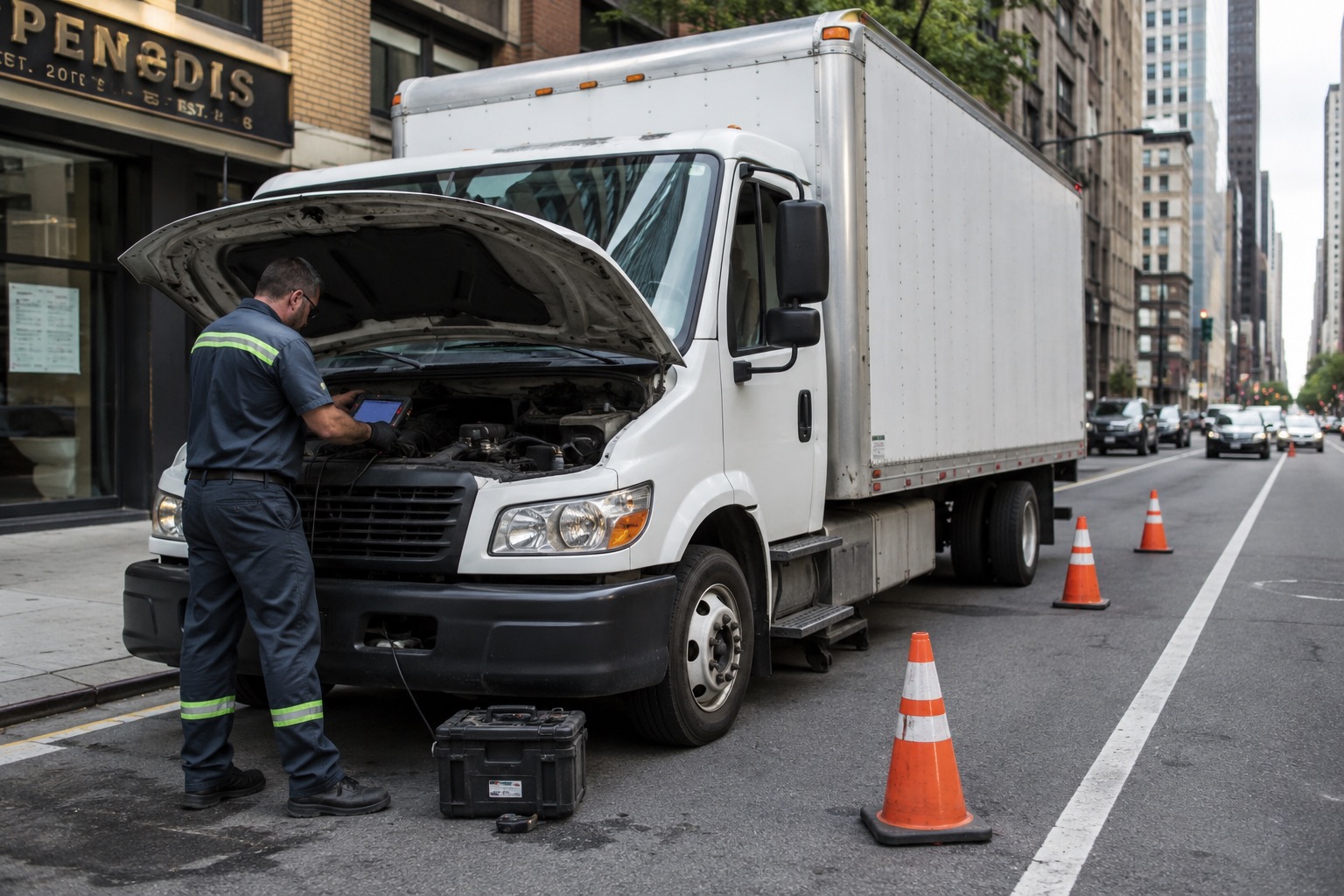
A stationary, or parked, regeneration can often be performed roadside using diagnostic equipment that communicates directly with the truck's ECM, forcing a controlled regen cycle while the truck is stopped safely. Before running a forced regen, a technician needs to check for the underlying cause — a failed differential pressure sensor, a NOx sensor reading out of range, low DEF quality or a frozen DEF line in cold weather, or a genuinely overloaded filter.
When Mobile Service Makes Sense vs. a Shop Visit
Most DEF-related faults, sensor faults, and standard soot-loading regen issues can be handled on-site. The exceptions are physical DPF damage — cracked substrate, melted cores from an uncontrolled regen, or a filter so heavily loaded it needs off-vehicle cleaning — which do require shop-level equipment.
DPF and DEF fault codes look alarming on the dash, but the majority of them are resolvable with an on-site diagnostic and a properly forced regeneration, no shop bay required. Call +1 (289) 943-7205 for 24/7 mobile dispatch and get an accurate diagnosis before you commit to a tow.